
Key takeaways
- How to rank in Perplexity: Perplexity is a search engine built on conversational answers, where users ask full questions instead of typing short keywords. To rank, businesses need to adapt their content to natural, question-based searches.
- Ongoing SEO is essential: steady investment in technical, on-page and off-page SEO helps keep your content crawlable, authoritative and up to date, so Perplexity can cite it.
- Authority drives visibility: building trust through high-quality content, reviews and unique resources increases the chances of your domain being mentioned in answers.
- Content optimisation matters: a clear structure, question-and-answer formatting and multimedia content (such as videos or charts) make content more useful and more likely to appear in Perplexity's answers.
- Fresh, research-backed insights win: updating content regularly and backing it with data or original research improves relevance, credibility and visibility.
As conversational answer engines like Perplexity grow in popularity, knowing how to rank well on them matters more and more. Unlike traditional search, where users type keywords, Perplexity users ask full questions, the way they would in a normal conversation.
To show the difference:
- Traditional search: you might type "pizza Shoreditch London" into Google.
- Perplexity: you would ask: "What's the best pizzeria near me in Shoreditch, London?"
With these differences in mind, here are some techniques you can use to optimise for conversational search on platforms like Perplexity.
Read: What is generative engine optimisation?
How to rank in Perplexity
To rank in Perplexity, follow these seven strategies to help your content stand out and gain visibility.
- Do SEO consistently
- Build an authoritative website
- Refresh your content
- Use questions and answers
- Optimise your content structure
- Include multimedia content
- Enrich content with research
1. Do SEO consistently
From our experience across hundreds of search campaigns, we have found that businesses doing ongoing search engine optimisation (SEO) perform better in Perplexity. That is because Perplexity works in a similar way to a search engine:
- It uses indexable and crawlable URLs to generate answers
- It cites authoritative domains relevant to a specific query
- It focuses on content that is current, specific and easy to "read".
Businesses that do SEO regularly are a step ahead of competitors that do not, or that have paused their search optimisation work. Keep investing in on-page, off-page and technical SEO and you will have a solid foundation for ranking in Perplexity.
Find out more about AEO vs SEO.
2. Build an authoritative website
Compared with other answer engines, Perplexity stands out for the weight it gives to:
- Authority
- Reputation
- Trust
This set-up can sometimes let bigger brands dominate the answers, such as Wikipedia for surface-level searches like "what is cold brew?". For more specific searches like "what's the best way to store cold brew", though, there is room for smaller, trusted brands.

The most effective ways to build an authoritative website go back to traditional SEO, for example:
- Producing shareable content, such as insights from a recent survey
- Developing interactive content, such as calculators
- Managing online reviews, for example on Google Business Profile, G2 or Trustpilot.
In most cases, this is one of the hardest jobs for a brand, because it means creating something unique and getting it known. AEO services can bring the skills needed to develop these assets and make sure they reach your audience. With over 400 million terabytes of data created on the internet every day, businesses have to make their way in a very crowded market.
3. Refresh your content
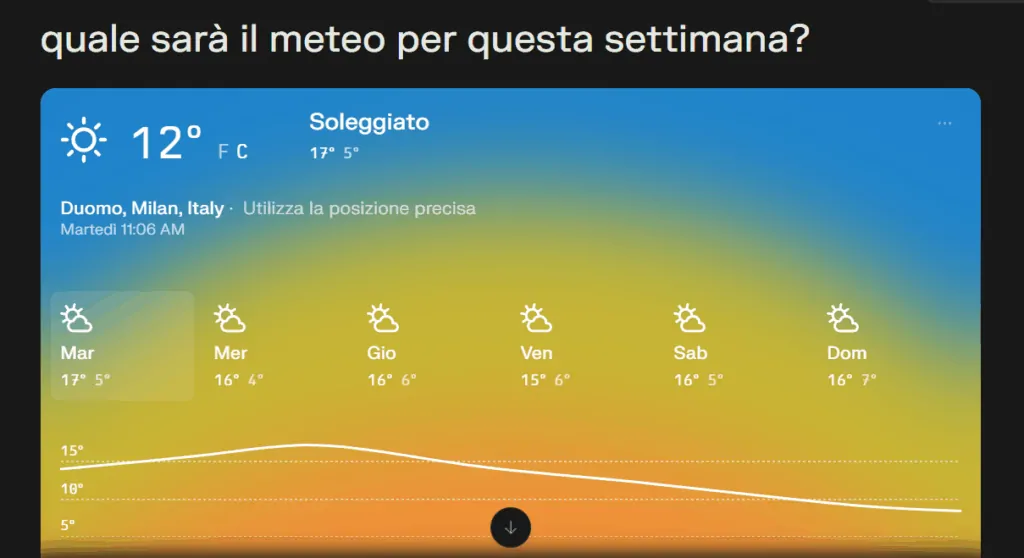
Like Google, Perplexity aims to offer a search experience where users can ask timely questions, whether that is checking the weather forecast or finding out who won at the Grammys. That is why Perplexity updates its index daily.
The answer engine also has a Discover section for the latest news:
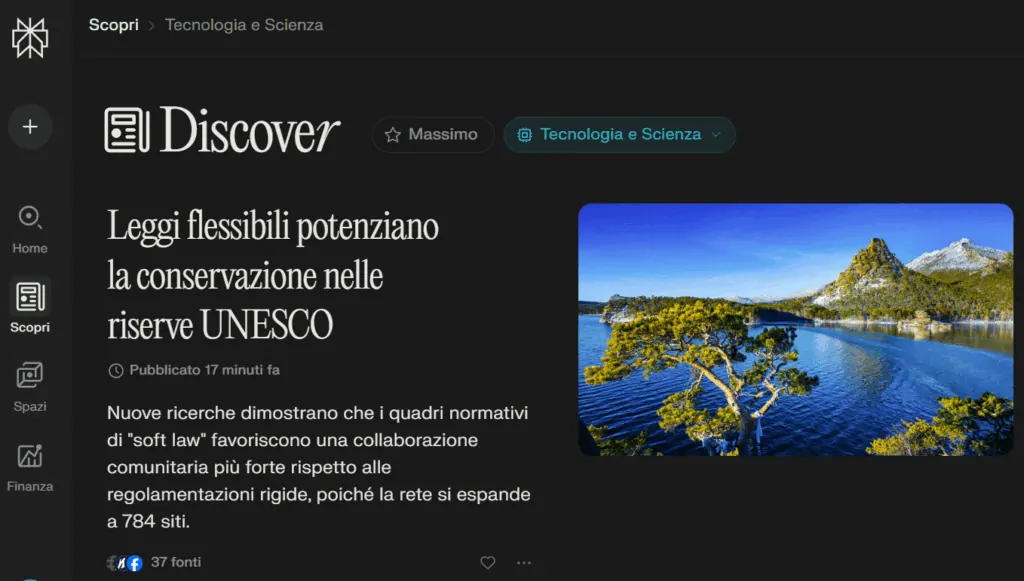
Businesses that want to improve their presence on topical (or even evergreen) subjects can use content refreshes to increase their visibility. As with search engine optimisation, these updates should add value to the page rather than just change a few words or sentences.
When you refresh content, ask questions such as:
- Is the content still relevant?
- What has changed since this article was published?
- Where are the gaps in the content?
Based on this initial research, you can put together a brief for the content update.
4. Use questions and answers
Compared with search engines, answer engines receive more conversational searches. Instead of searching "cold brew storage" on a search engine, users ask "what's the best way to store cold brew" on tools like Perplexity.
Because of this shift, businesses can benefit from adding question-and-answer sections to their content, such as:
| Question | Answer |
|---|---|
| What's the best way to store cold brew? | The best way to store cold brew is in an airtight container in the fridge. |
| Can I store cold brew in glass bottles? | Yes. Glass bottles are preferable because they are non-porous and stop the cold brew absorbing other flavours. |
| Does freezing cold brew change its flavour? | Yes. Freezing cold brew can alter its flavour, texture and freshness, which makes for a poorer drink. |
For the best results, focus on conversational questions and direct, concise answers. If you are familiar with featured snippet optimisation, the approach is similar to giving direct answers to common questions.
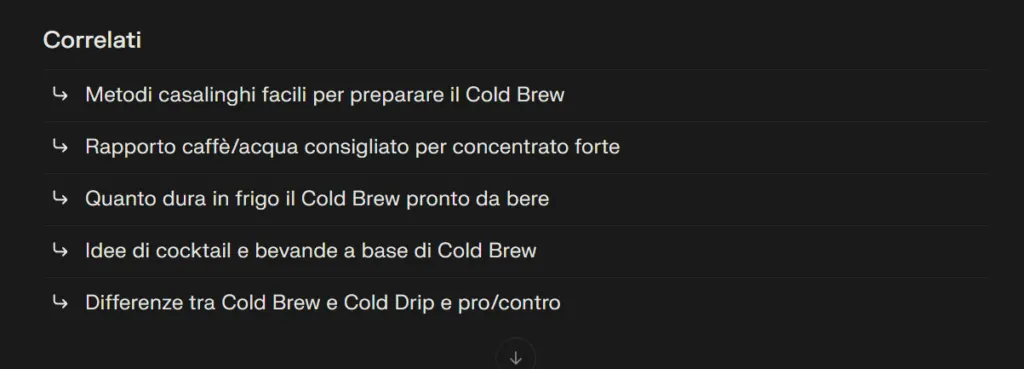
Tip: use the Related section of Perplexity's answers to come up with ideas for FAQs.
5. Optimise your content structure
Like traditional SEO, Perplexity SEO focuses on improving content structure, for example:
- Structuring content around search intent
- Organising content under descriptive headings
- Using lists and tables to organise content
- Adding text formatting, such as bold, underline or italics, to highlight the key points.
These changes make content more useful, which matters to both search and answer engines. Users who reach your website from Perplexity will also have a better experience, which can lead to longer sessions, micro-conversions and more.
6. Include multimedia content
Multimedia is a common feature of Perplexity's answers. That is because the answer engine wants to give users options: people who prefer a visual approach can watch a video, while others can read the AI-generated answer.
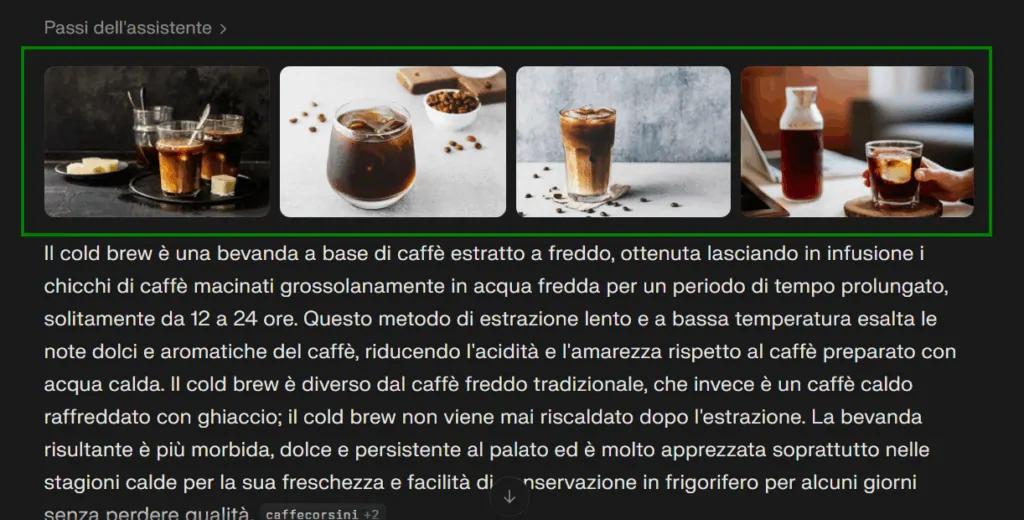
Businesses that leave multimedia elements out of their content miss a chance to reach users.
There are plenty of free and paid options for creating multimedia content, whether videos, graphics or photos. You can work with freelancers, use AI content generators and more to help users understand a concept, a process or an offer.
Tip: help users discover your brand by including your company logo on all your visuals.
7. Enrich content with research
Content is one of the biggest factors in ranking in Perplexity. Beyond freshness, structure and visuals, well-researched content is key to appearing in Perplexity's answers.
That is because research adds new, extra insight.
Take the earlier question: "What's the best way to store cold brew?". Your content could answer it while sharing findings from a recent survey, for example that, although glass is the best option for storing cold brew, X% of users said they use plastic.
Below is a research-backed answer in Perplexity to: "Is cold brew popular?"

In this example, Perplexity does not settle for a simple "Yes". Instead, it includes research that supports its answer, such as how cold brew's market share has grown over time and which age group is most likely to drink it.
How to track Perplexity rankings
As with other answer engines, tracking your position in Perplexity is not easy. Businesses that want to monitor their visibility will need to run searches manually or use tools that track positions in answer engines.
FAQs about Perplexity SEO
Got questions? Find the answers in these FAQs:
What is Perplexity AI?
Perplexity is an AI-powered search engine that uses natural language processing (NLP) and machine learning (ML) to offer a natural, conversational search experience. This simplifies searching by reducing the need to refine queries by hand.
Because Perplexity understands context, you can ask follow-up questions without repeating earlier queries. This creates a smooth, natural conversational flow that does not feel robotic. You can also upload files to give the AI more to work with.
You can also use Perplexity AI to generate content such as articles and images. Bear in mind that, while this can save you and your team valuable time and money, it is not yet a particularly effective SEO strategy.
How does Perplexity work?
According to Perplexity, "Perplexity functions as an answer engine by searching the web, identifying trusted sources, and synthesizing information into clear, up-to-date responses". Like AI Overviews, it aims to give users the information they need without "sifting through a list of links".
From the point of view of an SEO and AI marketing agency, Perplexity works like this:
- It gives priority to reliable, well-known sources, such as Wikipedia
- It favours fresh content, such as a new article or an updated post
- It focuses on relevance, for example a health blog over a news site for a health-related query
- It answers with different content formats, such as text, video and images.
The same applies to other search and answer engines. What sets Perplexity apart is its tendency to prefer better-known sources. A BrightEdge study found, for example, that Perplexity cites Yahoo, CNBC and MarketWatch more than Google does.
How could Perplexity AI affect SEO?
A recent study by enterprise SEO company BrightEdge found that Perplexity searches are growing by 40% a month and that 60% of the citations in those searches overlap with Google's top 10 organic results. What does this mean for search?
Perplexity will certainly bring changes to search, but SEO will remain essential for attracting organic web traffic. Google, after all, is still testing its AI Overview: experts expect that, once it fully launches, AI Overview will overtake Perplexity again.
That said, Google's ranking criteria are the ones most likely to change. Here are some examples:
- Contextual relevance: Perplexity's strong grasp of context means you need to consider contextual factors such as user intent and the relevance of information when creating content.
- Changes in search behaviour: as technologies like voice assistants spread, search language is likely to become more conversational over time. Moving away from a narrow keyword focus and prioritising natural speech can make your content a better fit for these tools.
- Focus on user engagement: engagement metrics such as bounce rate and time on page will probably play an even bigger role in search rankings. Writing for human readers rather than search crawlers can help improve these metrics and, in turn, your search visibility.
- Site credibility: the more authoritative your website, the better you will rank on AI-powered search engines like Perplexity. To build credibility, it can help to extend your SEO beyond individual pages into an omnichannel content strategy.
How long does Perplexity SEO take?
Perplexity SEO can take anywhere from a few weeks to several months. How long it takes to see results depends on the organisation's traditional SEO and how much it has invested in search optimisation.
For example, businesses that have been doing SEO continuously for years and invest time and resources in AEO often see results sooner than businesses that have not prioritised search optimisation.
Is it worth optimising content to appear in Perplexity?
Yes!
It is not the most popular AI search tool (that title goes to ChatGPT), but Perplexity still has a sizeable user base. The company processes over 100 million searches a week, close to half a billion a month.
Businesses that invest now in answer engine optimisation, including Perplexity, give themselves a competitive edge. Rather than starting later, when competition is stiffer, they will already have a solid foundation (and a presence) on the platform.
Get noticed in Perplexity with AI SEO
You now know how to rank in Perplexity and are ready to start growing your brand's presence in its answers. Need professional help? Contact us to find out how our AI SEO services can help.
