
Click-through rate (CTR) is one of the core metrics in digital marketing, whether you are running pay-per-click (PPC) ads or email campaigns. In this article we focus on CTR in SEO, or organic CTR, and cover:
- What is click-through rate in SEO?
- What is the CTR formula?
- Why does CTR matter for SEO?
- How to improve organic CTR.
What is click-through rate in SEO?
Click-through rate (CTR) in SEO is a metric showing the ratio between the users who clicked on your page in the SERP and the number of users who saw it in the SERP.
It is also called organic CTR and is usually expressed as a percentage.
What is the CTR formula?
The organic CTR formula is:
(Clicks / Impressions) x 100
For example, if your page was shown to 10,000 users in the SERPs and 2,500 of them clicked on it, the formula works like this:
(2,500/10,000) x 100 = 25%
The page's organic CTR is 25%.
Why does CTR matter for SEO?
A high organic CTR tells search engines that yours is a relevant page that meets the user's search intent. As a result, search engines may favour your page over other websites with lower CTRs.
CTR also tells you how to improve your SEO. Do your title and meta description tags encourage users to click on your result? Does your content match the right keywords and search intent?
By tracking organic CTR, you can optimise your title and meta description tags, as well as your content structure, to increase traffic to your site. That improves your SEO strategy and gives your site a better chance of ranking higher in the SERPs.
How to improve organic CTR
Now that you know what organic CTR is and why it matters, here are the best practices for SEO CTR:
- Write a title that matches search intent
- Optimise your meta description
- Use an optimised URL
- Use schema markup
- Optimise content for featured snippets.
Let's look at each one:
1. Write a title that matches search intent
Your page's title tag is the headline that appears in the SERPs. The aim is to catch users' attention with a title tag that fits the search intent, and to use some creativity to get them to click. A few tips:
- Use a tone that suits your target audience and their search intent.
- Include the target keyword in the title.
- Keep your title tag concise, at roughly 50 to 60 characters
- Avoid clickbait titles that mislead users
- Use strong phrases that prompt the searcher to act (in this case, click through to your site).
Depending on the type of content and your brand's tone, you can use different phrases to:
- Spark curiosity (example: 20+ Halloween decoration ideas for £10 or less)
- Create a sense of urgency (example: Hurry! 10% off Halloween decorations until 20 October)
- Highlight the benefits (example: Decorate your home for Halloween without breaking the bank)
2. Optimise your meta description
Meta descriptions appear in the SERPs together with the title.

Write a meta description that meets the search intent without giving everything away, and that encourages users to click. Here are some meta description tips that double as SEO CTR best practice:
- Keep meta descriptions concise, at roughly 160 characters or fewer
- Use a unique meta description for every page
- Add call-to-action (CTA) phrases.
3. Use an optimised URL
Optimise your URL with descriptive slugs that give users context about your page. An optimised URL makes your SERP listing look more credible, which makes users more likely to click. Here are some tips and examples for optimising your URL and improving organic CTR:
- Include your target keyword. If your target keyword is "outdoor christmas decorations", an example slug would be: www.example.com/category/outdoor-christmas-decorations
- Keep the URL short. Say your title tag is "20+ outdoor Christmas decorations under £80". You can use "/outdoor-christmas-decorations-under-80" instead of including every word in the title tag.
- Use hyphens to separate words. Hyphens between words make your URL easier to read. Note: spaces are not allowed in URLs.
4. Use schema markup
Want your page to stand out in the SERPs and lift your organic CTR? Use schema markup, also called structured data.
Schema markup is code that improves how your page appears in the SERPs by making it eligible for rich results. Take a look at this example:
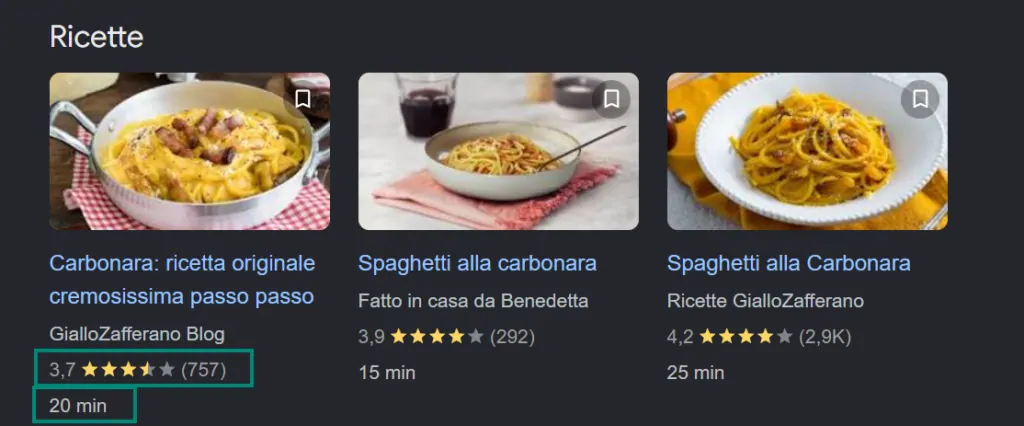
The SERP clearly shows these pages as recipes. Each result also shows an estimated cooking time and an average star rating, which gives more detail up front and encourages people to click.
Here are some examples of rich results that schema markup can help with:
- Carousel
- Knowledge Panel
- Breadcrumb.
5. Optimise content for featured snippets
Next on this list of SEO click-through rate best practices is optimising for featured snippets. A featured snippet summarises information at the top of a SERP, giving users a quick answer to their query (bear in mind that Google may also rewrite your result's title for you). It is also known as position zero.
Winning position zero can lift your organic CTR: results at the top and in the first five SERP positions take 68% of all clicks, a share that zero-click searches have eaten into considerably.
Here are some ways to get picked as a featured snippet and make your page more likely to be clicked:
- Give your content a clear structure: use subheadings to make it easy to read. Search engines can pull extracts from your page when it is well organised. Your readers benefit too, because they can take in the information more easily.
- Find and answer common questions about your target keyword: Google SERPs usually include a "People also ask" box. Your content can appear there when you answer frequent, related questions in short paragraphs within your content.
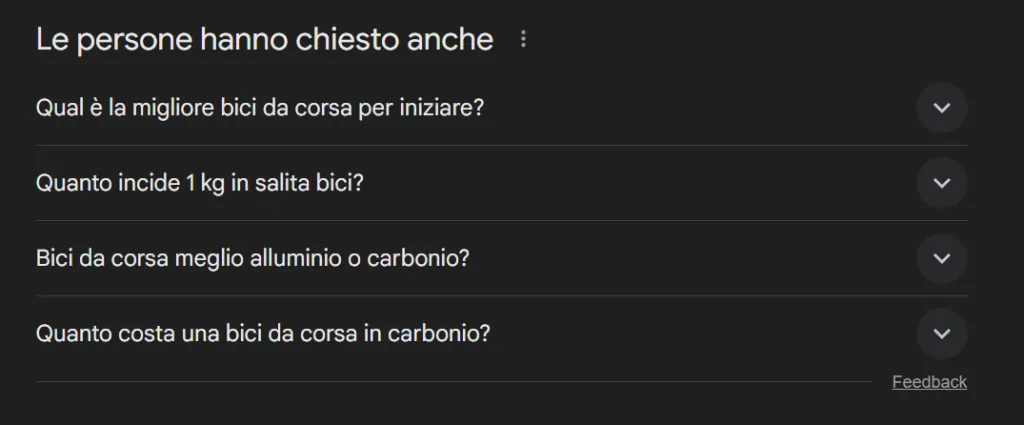
- Use bulleted or numbered lists when formatting content: search engines may pull your lists for related queries. Use a numbered list when you are explaining a process. Bulleted lists suit key points that do not need to be followed in order.
- Get your subheadings right: use the correct HTML structure for subheadings. Your page title should be an H1. Use H2 to H4 subheadings for the rest of the content, nested correctly to create a clear hierarchy of information.
Increase traffic to your site by improving your CTR
Click-through rate is one of the core metrics SEO professionals need to track and improve. By monitoring and improving your CTR, you bring more people to your site and give yourself more chances of turning visitors into leads and then customers.
Want to improve your SEO performance? Find out how Visilay can help you raise your organic CTR and sharpen your SEO strategy: get in touch.
