
Links are a core part of any search engine optimisation (SEO) strategy, and so is the anchor text you use to connect one page to another, whether the links are external or internal. Here is what you need to know about anchor text for SEO.
- What is anchor text?
- Why anchor text matters for SEO
- 7 types of anchor text
- 6 anchor text best practices
What is anchor text?
Anchor text is the clickable text on a page that links to another page. It is usually styled differently from the surrounding copy so that it stands out as a link. It is typically blue (or another colour, depending on the site's design), sometimes underlined, and its appearance is set in the website's CSS.
The definition is simple: it is the text used to link one page to another, and its job is to give context to readers and search engines.
An anchor text example
Here is an example of anchor text from our own site. A blog article points readers to another in-depth post, and the anchor text is "What is omnichannel SEO?" (the screenshot is taken from the Italian version of the blog).
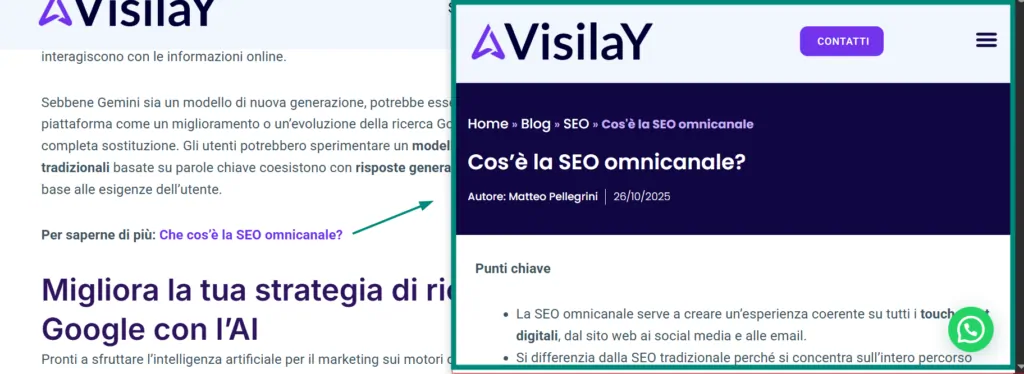
Anchor text is also known as link text or link label.
Why anchor text matters for SEO
What does anchor text do for SEO? It gives context both to visitors and to search engines. Here is how it helps each of them.
Why anchor text matters to visitors
Anchor text tells users what they will find if they click the link, which improves the user experience.
Like road signs, descriptive anchor text makes a website easier to get around.
Say you sell organic soaps and body lotions. Your soap category page might link to a blog post on the benefits of natural ingredients.
With the anchor text "benefits of natural ingredients in soap", users know straight away what the linked page is about. If they want to learn about the advantages of your organic, natural ingredients, they will click and keep reading.
So descriptive anchor text helps users find relevant information and understand the topic they are looking into. Overall, it improves their experience of your website and your brand.
Why anchor text matters to search engines
Anchor text also gives context to search engines. It helps them understand your site structure and the relationships between pages.
Say you run a SaaS business for restaurants. A blog post links to your product page to encourage readers to find out more about what you offer.
By using descriptive anchor text such as "restaurant SaaS" (rather than a generic "find out more here"), you tell search engines that the link points to a page about SaaS for restaurants. Anchor text usually lines up with the URL slug of the page it links to: in this example, something like /restaurant-saas/.
7 types of anchor text
There are seven main types of anchor text. Let's go through them one by one.
1. Exact match
Exact match anchor text is identical to the target keyword of the page you are linking to.
Say you sell SEO courses, and one of your blog posts links to the sales page for one of them.
Here is a sentence using the target keyword as exact match anchor text:

Both the anchor text and the target keyword of the linked page are "SEO course for beginners".
When you link to the same page several times in one piece of copy, avoid using exact match anchor text every time. Google treats this as a black-hat SEO signal and may penalise you for over-optimising for that keyword.
2. Partial match
Partial match anchor text uses a variation of the linked page's target keyword.
Take the previous example. The linked page is an SEO course page targeting "SEO course for beginners".
Partial match anchor text for the same page could look like this:

Here, "SEO lessons" is the anchor text for a page whose target keyword is "SEO course for beginners".
Partial match anchor text helps you avoid keyword stuffing, the practice of cramming too many target keywords into your copy. Stuffing like this can hurt your rankings.
With partial match anchor text you still give users and search engines the right context about what the linked page covers.
3. Related keyword
Like partial match, related keyword anchor text does not include the actual target keyword. It still gives context to users and search engines.
Here is related keyword anchor text for a page targeting "SEO course for beginners":

As with partial match, this anchor text uses a related phrase, "SEO training programme", and stops you overusing the target keyword.
4. Branded
Branded anchor text uses a brand name or product name as the link text, pointing to the home page or the product page.
This simple type of anchor text is useful for:
- Citing a source
- Linking directly to a website's home page
- Linking directly to a product page.
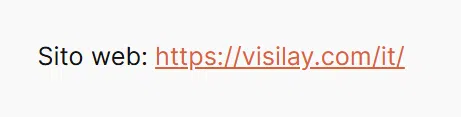
5. Naked URL
A naked link uses the page's actual URL as the anchor text. You usually see it in the footer or on "Contact" pages, and it looks like the example below:
6. Image
You can also use images as links. In that case the image's alt text becomes the anchor text.
Tip: write descriptive and concise alt text for your images, so that search engines and screen reader users get clear context about the image and the link.
7. Generic
Generic anchor text tells visitors and search engines nothing about the link. Some examples:
- Click here
- Find out more
- Download now
When you use generic link text, add contextual information in the sentence around the link so that readers and search engines know where it will take them.
6 anchor text best practices
These are the best practices to follow for anchor text.
1. Make your anchor text easy to spot
Give users a better experience by making anchor text recognisable and visually distinct from the surrounding text, so visitors know it is clickable. Define the link style in your CSS to keep it consistent across pages.
2. Use a mix of anchor text types
As a rule, using the target keyword of the linked page as anchor text is a good idea. Overdo it, though, and it can look like keyword stuffing.
If you need to include the same link several times on a page, use a different type of anchor text, such as a related keyword or a partial match. That way Google will not think you are trying to over-optimise for one keyword.
3. Keep anchor text short
Keep anchor text concise, around seven words or fewer. Long anchor text is less inviting for your readers.
4. Write descriptive, concise alt text
When you use an image to link to another page, describe it briefly in its alt text, because that becomes the link's anchor text. Do not stuff it with keywords: keep readability in mind.
5. Shorten naked URLs
Keep the URL short so readers can remember it. Strip out tracking parameters (UTM) from the URL.
For example, to send readers to your home page, use this anchor text:
www.example.comRather than a long string with UTM parameters:
www.example.com ?utm_source=search&utm_medium=banner&utm_campaign=product-x-launch&utm_id=product-x6. Go easy on generic anchor text
Generic anchor text such as "find out more" tells visitors and search engines nothing about the link's topic, so use it sparingly.
When you do need it, add contextual information nearby so users and search engines get an idea of where the link goes.
Optimise your anchor text to support your SEO
Optimised anchor text makes your site easier to use. Write concise, descriptive and consistent anchor text for your links and you will guide users to the information they need.
Apply the best practices above to improve your chances of ranking. If you want professional help, get in touch and we will help you improve your on-page SEO.
